

How to choose your Best Water Filter for Camping
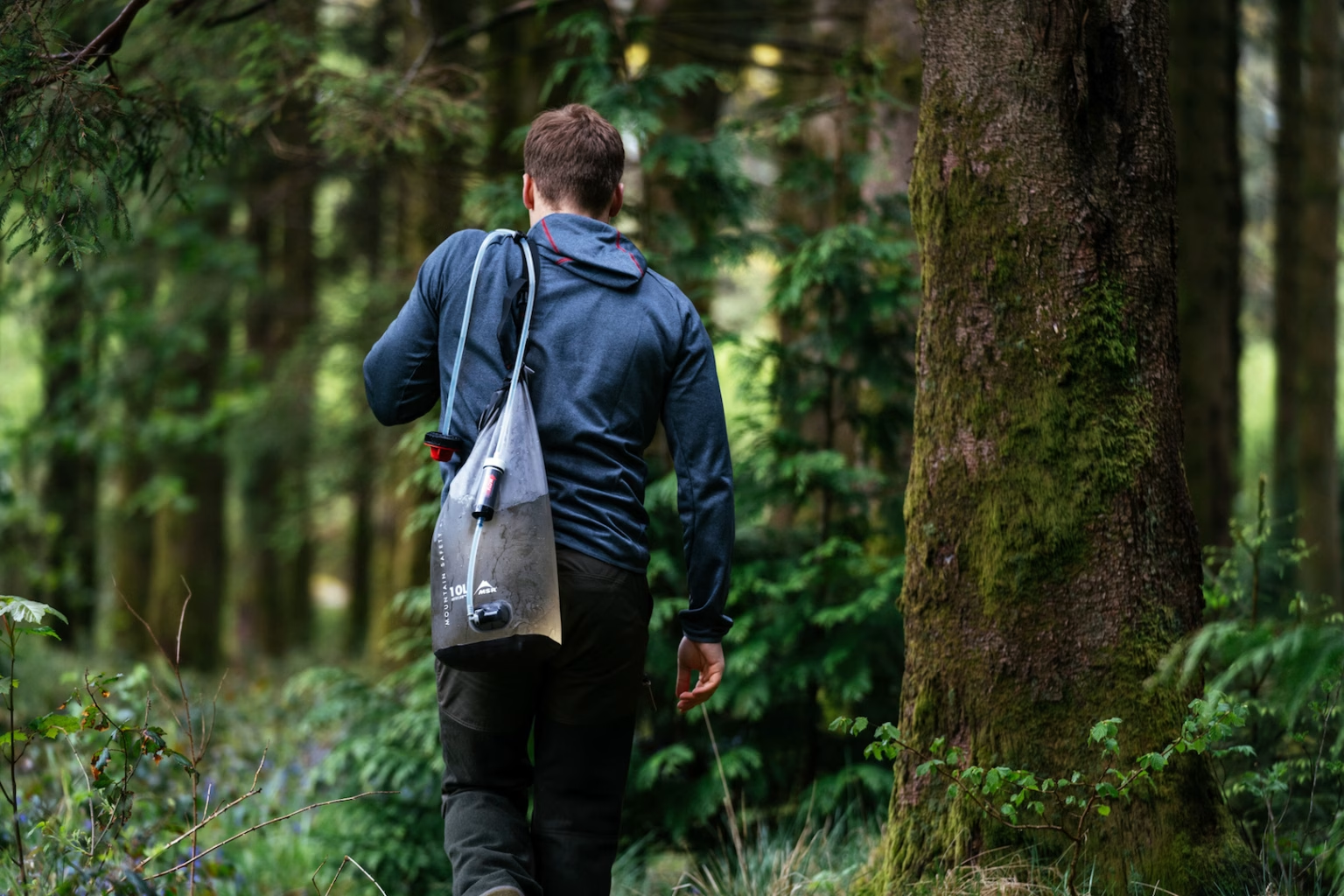
There’s nothing quite like the feeling of being out in the wild, surrounded by nature. But let’s be real, nothing ruins a camping trip faster than a nasty bout of stomach trouble. That’s why a reliable water filter for camping is an absolute non-negotiable piece of gear. Even the most crystal-clear stream can be teeming with invisible nasties that can leave you feeling less than stellar. With more and more people discovering the joys of the great outdoors, the chances of encountering contaminated water sources are on the rise. So, why take the risk when there are so many effective and easy-to-use water treatment options available? This guide will walk you through everything you need to know to choose the perfect water filter for camping, ensuring you stay healthy and hydrated on all your adventures.
Understanding the Basics: Water Filters vs. Water Purifiers
Before diving into the specifics of different systems, it’s crucial to understand the fundamental difference between a water filter and a water purifier. This distinction lies in the size of the microorganisms each device is designed to combat.
Water filters are designed to physically strain out larger pathogens. These typically include protozoan cysts like Cryptosporidium and Giardia lamblia, as well as common bacteria such as E. coli, Salmonella, Campylobacter, and Shigella. For most camping trips within the U.S. and Canada, these biological pathogens are the primary concerns you’ll encounter in natural water sources.
Water purifiers, on the other hand, take protection a step further. They are capable of combating viruses, which are significantly smaller than bacteria and protozoa, making them too tiny for most standard filters to effectively capture. If your adventures take you to less-developed regions of the world, where waterborne viruses like hepatitis A, rotavirus, and norovirus are more prevalent, a water purifier is an essential piece of gear to consider for your water filter for camping setup.
How Do These Systems Actually Work?
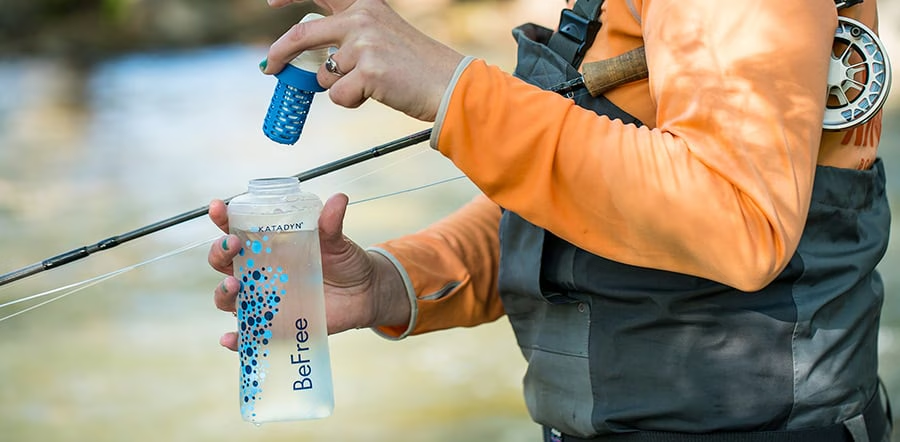
At the heart of every effective water filter and many purifiers is an internal element or cartridge. This component is equipped with microscopic pores specifically designed to trap debris, protozoa, and bacteria. Over time, as these contaminants are removed from the water, they can accumulate and clog the element’s pores. This necessitates regular cleaning and, eventually, replacement of the cartridge to maintain optimal performance.
For purification, beyond physical filtration, many purifiers utilize chemical agents, such as iodine, to neutralize viruses that are too small for mechanical filtration.
Another increasingly popular purification method employs ultraviolet (UV) light to effectively treat pathogens. Many modern water filter for camping solutions also incorporate activated carbon into their elements. This is a fantastic addition because activated carbon excels at removing unpleasant tastes and odors, often caused by natural elements like leaf tannins. Furthermore, it can reduce the presence of contaminants such as pesticides and other industrial chemicals, making your water not just safe, but also palatable.
The Unsung Hero: The Role of a Prefilter in Your Camping Water System
When you’re out in the wilderness, water sources can vary wildly. You might encounter glacial melt, silty river water, or even water muddied by recent rainfall and leaf debris. While these natural particles aren’t typically a health concern, they can significantly impact the efficiency of your water filter for camping and the lifespan of its components. Murky water can quickly clog filter elements, reducing flow rates and increasing the frequency of maintenance.
This is where a prefilter becomes an invaluable accessory. A prefilter is a simple yet effective tool designed to remove larger particles from your water before it reaches your main filter or purifier. By doing so, it significantly improves the overall treatment process.
Many pump-style water filters come equipped with an integrated prefilter, but for other systems, you might need to purchase one separately. Here are compelling reasons to incorporate a prefilter into your camping water treatment setup:
- Maintains Flow Rate and Extends Filter Life: By removing larger sediment, a prefilter helps maintain the optimal flow rate of your pump filter, reduces the need for frequent field cleaning, and ultimately extends the lifespan of your main filter element.
- Enhances Chemical Treatment Effectiveness: If you’re relying on chemical treatments, clear water allows the chemicals to work more efficiently, as they don’t have to contend with suspended particles.
- Essential for UV Purifiers: For those using UV purifiers, a prefilter is absolutely critical. UV light needs to penetrate the water to effectively neutralize pathogens. If the water is cloudy or silty, the UV rays can be blocked, rendering the purification ineffective. A prefilter ensures your water is clear enough for the UV light to do its job.
Exploring Your Options: Types of Water Filters and Purifiers for Camping
When it comes to choosing the right water filter for camping, the market offers a diverse array of options, each with its own set of advantages and considerations. Understanding these different types will help you make an informed decision based on your specific camping style, group size, and water source availability. While innovation continues to bring forth hybrid designs and unique products, the following categories represent the core methods of water treatment available to campers.
Quick Reference Guide: Choosing Your Ideal Water Treatment Method
To help you quickly assess which type of water filter for camping might be best for your needs, here’s a quick reference guide summarizing the key characteristics of each method. Remember, this is a starting point; always delve into specific product descriptions, specifications, and reviews before making your final choice.
| Method | All-around Performance | Large Volume | Low Maintenance | Ease of Use | Low Weight | Low Cost | Speed | Suitable for Internal Link |
| Pump Filters and Purifiers | X | X | ||||||
| Gravity Filters and Purifiers | X | X | ||||||
| Ultraviolet (UV) Purifiers | X | X | X | |||||
| Bottle Filters and Purifiers | X | X | X | |||||
| Squeeze Filters | X | X | X | |||||
| Straw-Style Filters | X | X | X | |||||
| Chemicals | X | X | X | X | ||||
| Boiling | X | X | X | X |
Now, let’s dive deeper into each of these methods to give you a clearer picture of how they work and what to expect.
Pump Filters and Purifiers: The Workhorse of Water Treatment
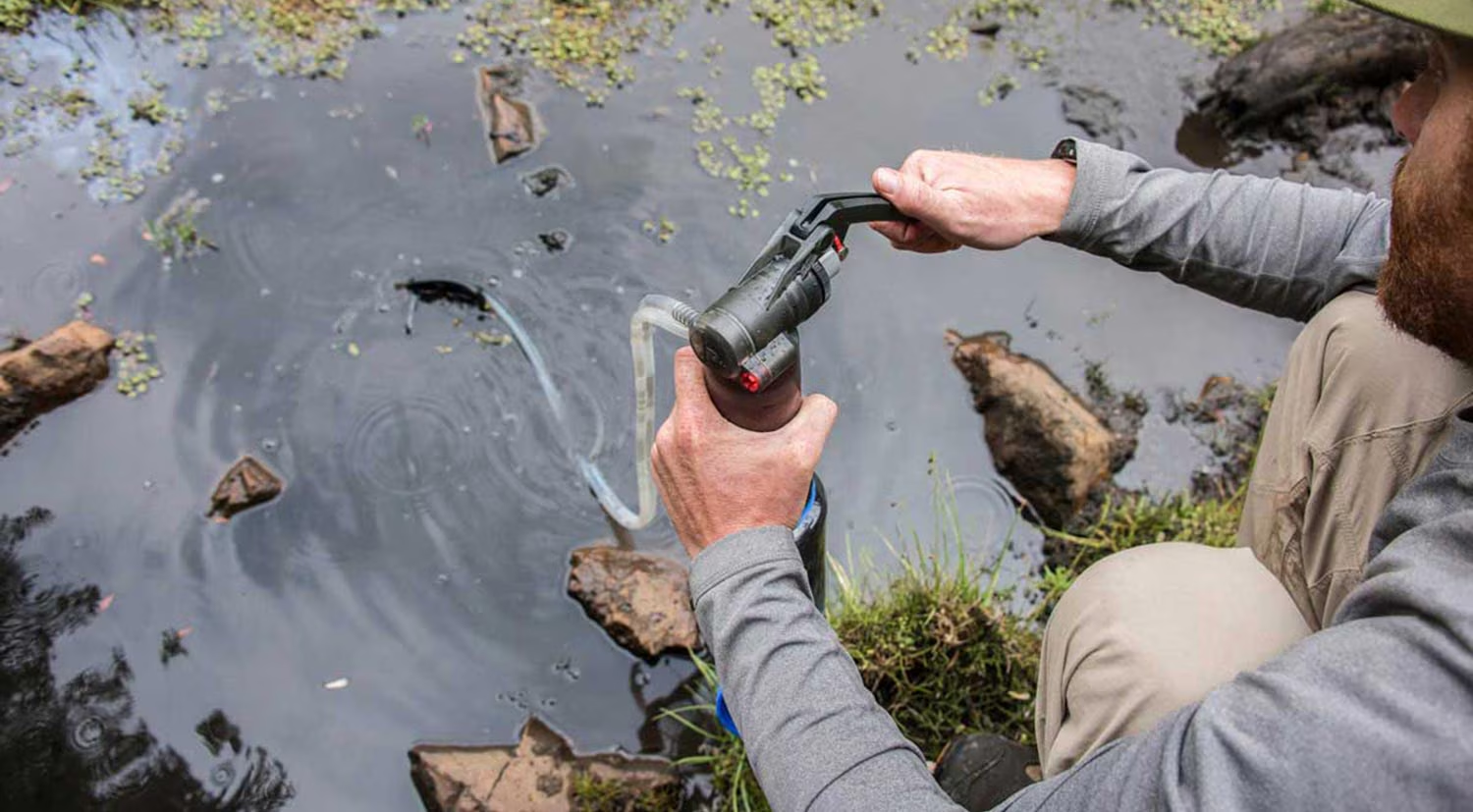
Pump filters and purifiers are a classic choice for many campers and backpackers due to their versatility and ability to draw water from various sources. The operation is straightforward: you drop an intake hose into your water source and an outlet hose into your clean water container, then manually work a pump. Some advanced models even allow direct threading to a water bottle or reservoir, streamlining the process. While the basic principle is the same, pump mechanisms and flow rates can differ significantly between models, so comparing specifications is key when choosing your water filter for camping.
Pros of Pump Filters and Purifiers:
- Precise Water Processing: You have full control over the amount of water you treat, making it efficient for individual use or small groups.
- Access to Shallow Sources: These systems excel at drawing water from shallow pools, seeps, or other limited water sources that might be inaccessible to other methods.
- Replaceable Elements: The internal filter element or cartridge is typically replaceable, extending the overall life of the unit.
Cons of Pump Filters and Purifiers:
- Manual Effort Required: Pumping can become a chore, especially if you need to treat large quantities of water or if the filter element starts to clog.
- Field Cleaning Necessary: Regular field cleaning of the element is required to maintain flow rate and prevent clogging.
- Increased Weight and Bulk: Compared to some other methods, pump filters and purifiers tend to be heavier and bulkier, which can be a consideration for ultralight backpackers.
Gravity Filters and Purifiers: Let Gravity Do the Work
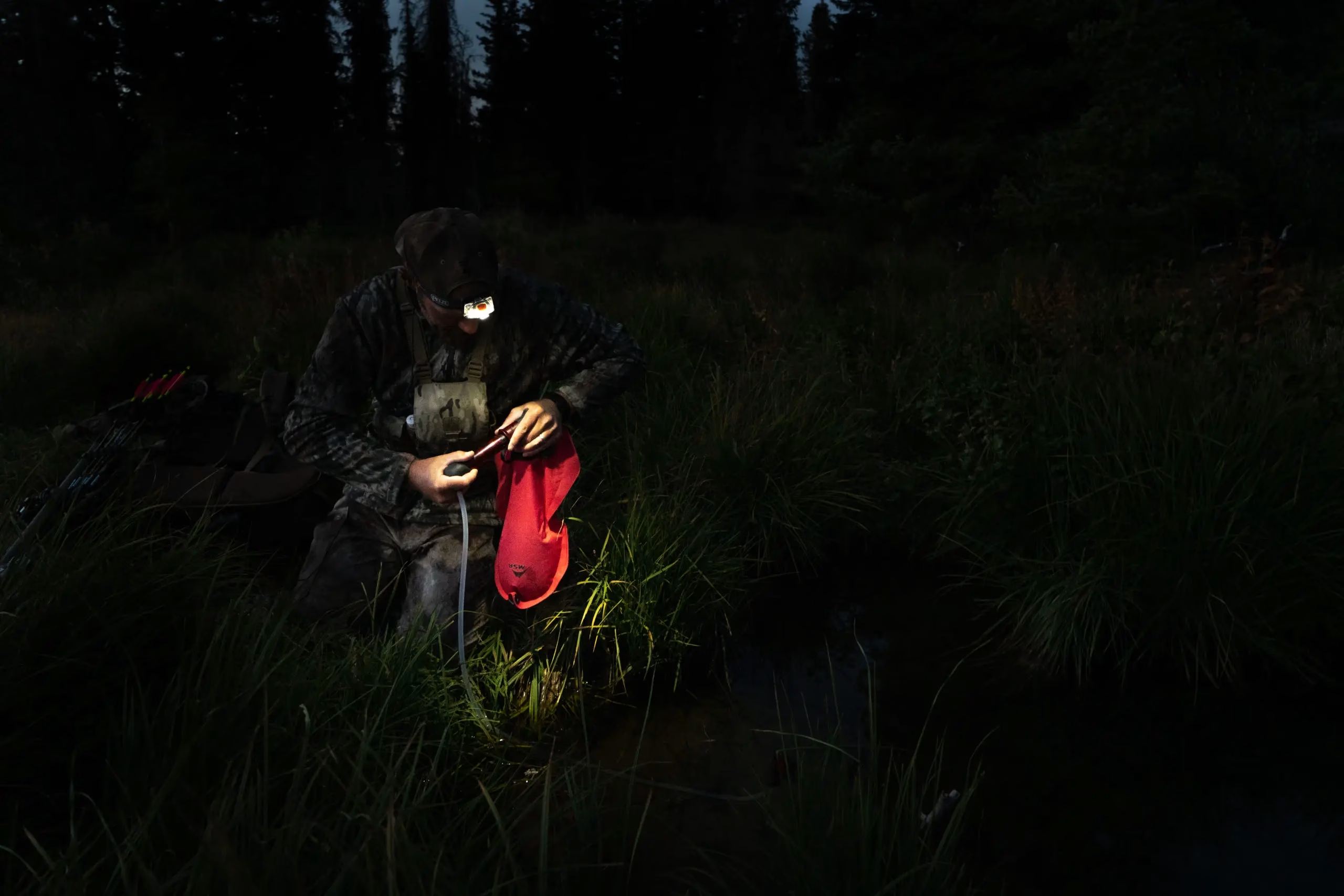
For those who prefer a more hands-off approach to water treatment, gravity filters and purifiers are an excellent choice, especially for group camping or when you need to process larger volumes of water. The concept is elegantly simple: you fill an upper reservoir with untreated water, hang it from a tree branch or other elevated point, and let gravity do the rest. The water slowly filters through an inline element into a lower, clean water reservoir. Most models come as a complete system with two reservoirs and an inline filter, though configurations can vary.
Pros of Gravity Filters and Purifiers:
- Effortless Operation: Once set up, gravity does all the work, freeing you up for other camp tasks.
- Ideal for Large Groups: These systems are particularly well-suited for processing significant quantities of water, making them perfect for larger camping parties or basecamp setups.
- Replaceable Elements: Like pump filters, the filter element or cartridge is typically replaceable, ensuring long-term usability.
Cons of Gravity Filters and Purifiers:
- Setup Can Be Tricky: Finding a suitable elevated spot to hang the reservoirs can sometimes be a challenge, especially in dense forests or open terrain.
- Slower Treatment Time: The filtration process is generally slower compared to pumping, requiring some patience.
- Limited by Water Source Access: Filling the upper reservoir from shallow seeps or very limited water sources can be difficult.
- Field Cleaning Required: Regular cleaning of the filter element is still necessary to maintain efficiency and prevent clogging.
Ultraviolet (UV) Light Purifiers: Modern Technology for Clean Water
Ultraviolet (UV) light purifiers offer a high-tech, convenient solution for treating water in the backcountry. These pen-style devices are incredibly simple to use: you immerse the UV lamp into your water bottle, press a button, and gently stir. After about 60 seconds, or once the device indicates completion, the UV light will have effectively neutralized the pathogens in your water. This method is particularly appealing for its speed and ease of use, making it a popular choice for many who seek a quick and efficient water filter for camping solution.
Pros of UV Light Purifiers:
- Rapid Treatment: Water is quickly made drinkable, often in under two minutes per liter.
- Effortless Operation: No pumping or strenuous effort is required; simply press a button and stir.
- Minimal Maintenance: Unlike physical filters, there are no elements to clean or replace due to clogging.
Cons of UV Light Purifiers:
- Battery Dependent: These devices require batteries to operate, meaning you need to carry spares or have a charging solution, especially on longer trips.
- Clarity is Key: Silty or cloudy water significantly impairs the effectiveness of UV light. A prefilter is absolutely essential to ensure the water is clear enough for the UV rays to penetrate and neutralize pathogens.
- Batch Processing: You typically treat water one bottle at a time, which can be less efficient for producing large quantities for a group.
Bottle Filters and Purifiers: Hydration On-the-Go
Bottle filters and purifiers offer the ultimate in fill-and-sip convenience, integrating the filtration or purification element directly into a water bottle. These systems are designed for immediate hydration, allowing you to drink directly from the source or a filled bottle. Some models utilize suction, similar to a bite valve, to draw water through the filter, while others operate like a coffee press. There are even innovative designs that incorporate UV light technology within the bottle itself. This type of water filter for camping is perfect for day hikes, trail running, or as a personal backup system.
Pros of Bottle Filters and Purifiers:
- Instant Hydration: Water is quickly treated and ready to drink, offering unparalleled convenience.
- User-Friendly: The integrated design makes them incredibly easy to use, even on the move.
- Replaceable Elements: Most models feature replaceable filter elements or cartridges, ensuring the longevity of your bottle.
- Lightweight and Cost-Effective: On average, these systems are lighter and more affordable than bulkier pump or gravity filters.
Cons of Bottle Filters and Purifiers:
- Limited Water Quantity: The amount of water you can treat at one time is limited by the bottle’s capacity, making them less suitable for large groups or extensive cooking needs.
- Field Cleaning Required: Regular cleaning of the filter element is still necessary to maintain flow and prevent clogging.
Squeeze Filters: Versatile and Compact Water Treatment
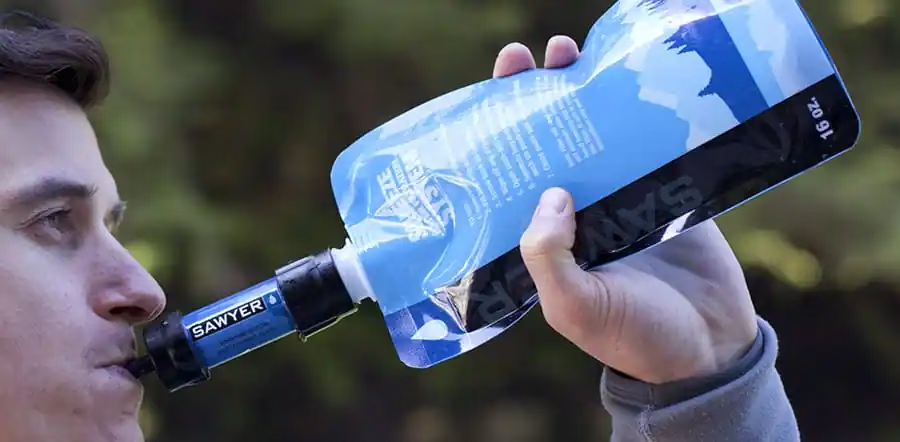
Squeeze filters represent a broad category of compact and highly portable water treatment solutions. Similar in principle to bottle filters, these systems typically involve filling a small reservoir (often a soft flask or bag) with untreated water, then squeezing the water through an integrated filtration element. Their versatility often allows them to double as components for gravity systems or even as straw-style filters, making them a popular choice for ultralight backpackers and day-trippers seeking a multi-functional water filter for camping.
Pros of Squeeze Filters:
- Quick and Easy Treatment: Water is treated rapidly and is ready for immediate consumption.
- Replaceable Elements: The filter element or cartridge can be replaced, extending the life of the unit.
- Multi-functional: Many models can be adapted for use as gravity filters or inline with hydration systems, adding to their value.
- Lightweight and Affordable: Generally lighter, smaller, and more cost-effective than traditional pump or gravity filters.
Cons of Squeeze Filters:
- Limited Volume: The amount of water that can be treated at once is restricted by the size of the reservoir or flask.
- Field Cleaning Required: Regular cleaning of the filter element is necessary to maintain flow rate and prevent clogging.
Straw-Style Filters: Direct from Source Hydration
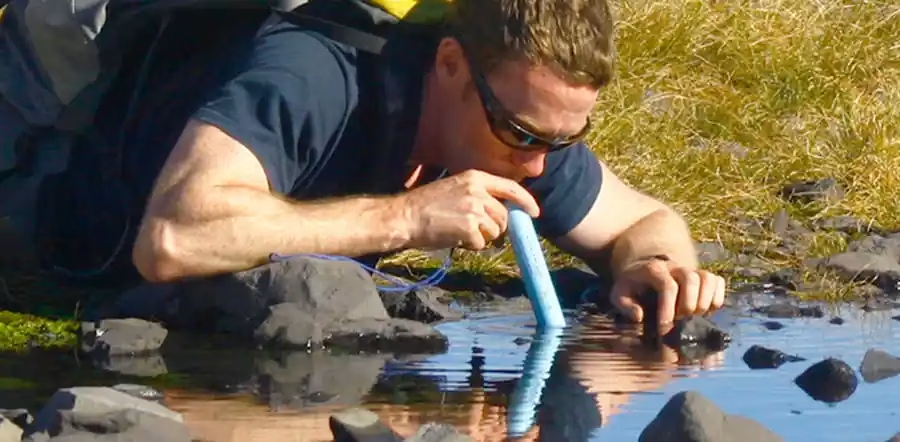
Straw-style filters offer the most direct and minimalist approach to water treatment. These compact, cylindrical devices contain a built-in filter element that allows you to drink directly from a water source, such as a stream or lake, by simply sipping through the straw. They are incredibly lightweight and convenient, making them an excellent emergency backup or a primary water filter for camping for solo adventurers who prioritize minimal gear.
Pros of Straw-Style Filters:
- Immediate Hydration: Water is treated on demand, allowing for quick and easy access to safe drinking water.
- Ultra-Lightweight and Compact: These are among the lightest and most portable water treatment options available.
- Cost-Effective: Generally more affordable than many other filter types.
Cons of Straw-Style Filters:
- Source-Dependent: You must be physically at the water source to use them, which can be inconvenient.
- Single-Person Use: Primarily designed for individual use and not suitable for treating water for cooking or a group.
- Field Cleaning Required: Regular cleaning of the filter element is necessary.
- Non-Replaceable Elements: Not all models feature replaceable elements, meaning the entire unit must be discarded once the filter reaches its lifespan.
Chemical Treatments: A Lightweight and Reliable Backup
Chemical treatments, typically in the form of tablets or drops, are a time-tested method for purifying water in the backcountry. They are effective against a broad spectrum of pathogens, including protozoa, bacteria, and viruses. The process is simple: you add the specified amount of chemical to your gathered water and wait for the recommended contact time. Products commonly use iodine or chlorine-based compounds, and they are available in various forms, including pills, drops, or even gadgets that mix base ingredients. While they require patience, chemical treatments are an excellent lightweight and ultra-portable option, often serving as a reliable backup for any water filter for camping setup.
Pros of Chemical Treatments:
- Ease of Use: Simple to administer with minimal fuss.
- Ultra-Portable and Inexpensive: Extremely lightweight, compact, and budget-friendly, making them ideal for emergency kits or as a secondary treatment method.
- Effective Against Viruses: Many chemical treatments are effective against viruses, offering a higher level of purification than some filters.
Cons of Chemical Treatments:
- Significant Wait Time: Requires a considerable wait time (typically 30 minutes to 4 hours, longer in cold water) before the water is safe to drink.
- Taste Alteration: Iodine-based products can impart a distinct chemical taste to the water, though taste-neutralizer tablets are available to counteract this.
- Limited Effectiveness (Iodine): Iodine products are generally not effective against Cryptosporidium, a common protozoan, though they work well against other protozoa.
- Health Considerations: Iodine products can be a concern for pregnant women and individuals with thyroid conditions, so always read the directions and warnings carefully.
Boiling: The Tried-and-True Method
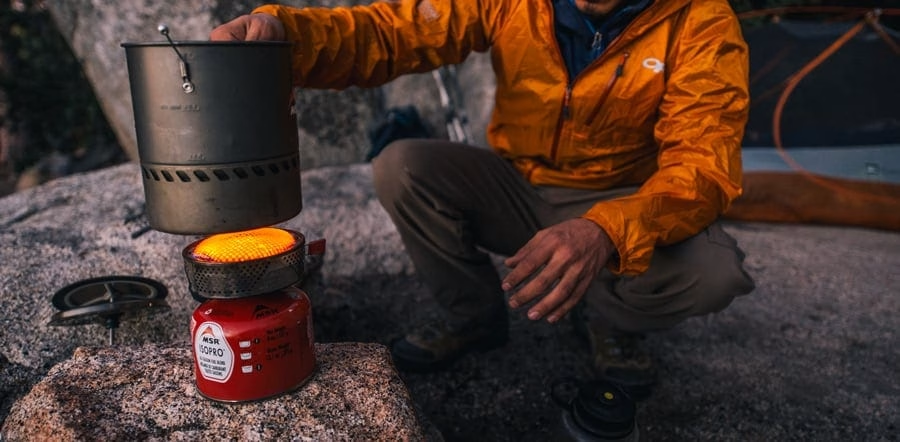
Boiling water is arguably the oldest and most reliable method for making water safe to drink in the wilderness. All you need is a heat source (your camping stove), fuel, and a pot. Bringing water to a rolling boil for at least one minute effectively kills the full spectrum of biological pathogens, including protozoa, bacteria, and viruses. If you find yourself above 6,500 feet in elevation, it’s recommended to boil the water for three minutes to account for the lower boiling point at higher altitudes. While it might not be the most convenient method for on-the-go hydration, boiling serves as an excellent primary method for basecamp use or a dependable backup for any water filter for camping.
Pros of Boiling:
- Universal Effectiveness: Kills all biological pathogens, regardless of size or type.
- No Special Equipment (Beyond Stove): You likely already have the necessary gear (stove, fuel, pot) for cooking.
- Unaffected by Murky Water: The effectiveness of boiling is not impaired by sediment or cloudiness in the water.
- Reliable Backup: An indispensable backup method in case your primary water treatment system fails.
Cons of Boiling:
- Time and Effort: Requires time and fuel to bring water to a boil, and then additional time for it to cool down before drinking.
- Fuel Consumption: If it’s your primary treatment method, you’ll need to carry extra fuel, which adds weight and bulk.
- Not Ideal for On-the-Go: Impractical for immediate hydration needs while hiking.
Mastering Water Treatment: Essential Tips and Best Practices for Campers
Having the right water filter for camping is only half the battle; knowing how to use it effectively and practicing good hygiene are equally crucial for ensuring safe drinking water in the backcountry. By avoiding a few common mistakes and taking some simple precautions, you can significantly enhance the effectiveness of any water treatment method and keep yourself healthy throughout your outdoor adventures.
- Designate and Separate Containers: A fundamental rule of backcountry water treatment is to clearly separate and designate your dirty and clean water containers. This simple practice prevents cross-contamination, where untreated water accidentally mixes with your purified supply. Use different colored bottles or label them clearly to avoid any confusion.
- Follow Directions Meticulously: Every water treatment product comes with specific instructions for use, particularly regarding preventing cross-contamination. These detailed steps are designed to ensure the efficacy of the treatment. Don’t skip steps or assume you know best; always read and adhere to the manufacturer’s guidelines for your chosen water filter for camping or purification method.
- Seek Out Clear Water: While many filters can handle some turbidity, seeking out the clearest water source available will always improve treatment effectiveness and extend the life of your filter. If only murky sources are accessible, utilize a prefilter (as discussed earlier) or allow the water to settle in a container for a period, letting sediment sink to the bottom, before running it through your filter.
- Maintain Hand Hygiene: Your hands are a common vector for contamination. Always pack hand sanitizer and use it frequently, especially before handling clean water containers or your water filter for camping equipment, and after using the restroom.
- Practice Proper Camp Sanitation: To protect water sources and minimize the spread of pathogens, establish camp, toilet, and dishwashing areas at least 200 feet (approximately 70 paces) away from any water source. This helps prevent human waste and food particles from contaminating streams, lakes, and springs.
- Special Considerations for Freezing Conditions: Cold weather presents unique challenges for water treatment. Melting snow is often the most reliable source of water. Filters can freeze and crack, rendering them useless; to prevent this, store your water filter for camping inside your sleeping bag overnight. However, this won’t help if daytime temperatures remain below freezing. Batteries in UV pens drain faster in the cold, and the effectiveness of many chemical treatments diminishes in low temperatures, so always read product directions carefully for cold-weather usage.
For more essential gear and preparation tips for your outdoor excursions, be sure to check out our comprehensive guide on camping checklist for first timers. It’s packed with valuable information to help you plan a successful and enjoyable trip.