

Camping Backpack Size Guide: Finding Your Perfect Fit
Choosing the right camping backpack is more than just picking a cool color or a popular brand. It’s about finding a pack that truly fits your body, ensuring comfort and efficiency on the trail. This comprehensive camping backpack size guide will walk you through the essential steps to measure yourself accurately and select a backpack that feels like an extension of your body, not a burden. Forget the guesswork; let’s dive into how to achieve that perfect fit for your next adventure.
Why Torso Length is Your Backpack’s Best Friend
When it comes to selecting a camping backpack size guide, your torso length is the single most critical measurement. It’s a common misconception that your height dictates your backpack size, but in reality, two people of the same height can have vastly different torso lengths. A backpack designed for a specific torso range will distribute weight effectively, preventing discomfort and potential injury on long hikes. So, how do you accurately measure this crucial dimension?
How to Measure Your Torso Length for a Backpack
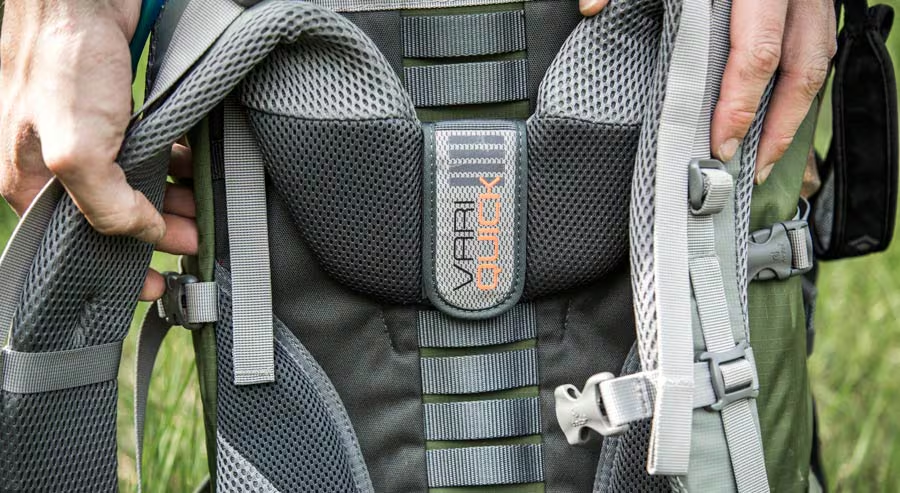
To get the most accurate measurement, you’ll need a flexible tape measure and a helpful friend. This isn’t a solo mission, so grab a buddy and follow these simple steps:
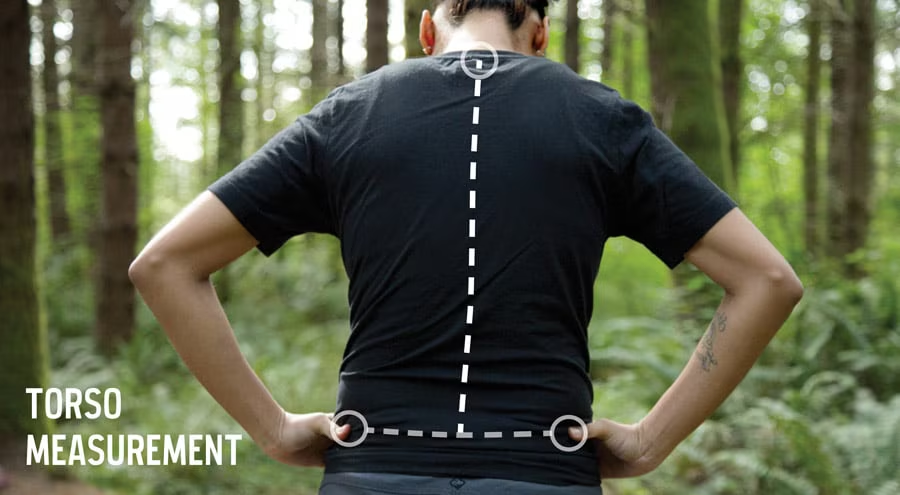
1.Locate Your C7 Vertebra: Begin by tilting your head forward. Feel for the most prominent bony bump at the base of your neck, where your shoulders meet your spine. This is your 7th cervical (C7) vertebra, and it marks the top point of your torso measurement.
2.Find Your Iliac Crest: Next, slide your hands down your sides, just above your hips, until you feel the top of your hip bones. These are your iliac crests. With your index fingers pointing forward and your thumbs pointing backward, imagine a straight line connecting your thumbs across your lower back. This imaginary line is the bottom point of your torso measurement.
3.Measure the Distance: Stand up straight and have your friend measure the distance between your C7 vertebra and the imaginary line you’ve created with your thumbs. This measurement, in inches, is your precise torso length. Write it down; it’s your golden number for finding the perfect camping backpack size guide.
Translating Torso Length into Backpack Size
Once you have your accurate torso length, you’re ready to start looking at backpack size charts. It’s important to remember that pack sizes can vary significantly between brands and even between different models from the same brand. Always consult the specific size chart provided by the manufacturer for any backpack you’re considering. If your measurement falls between two sizes, it’s generally advisable to try on both to see which offers a more comfortable and secure fit. While this guide provides crucial information,
the best fit will always come from physically trying on backpacks, ideally with some weight in them to simulate a real load.
The Importance of Hip Size: A Foundation for Comfort
While torso length is paramount, don’t overlook your hip size. The hipbelt is designed to carry the majority of your backpack’s weight, transferring it from your shoulders to your stronger leg muscles. A well-fitting hipbelt is crucial for comfort and stability on the trail. Although it’s uncommon for hipbelt sizing to be drastically off if your torso length is correct, it’s still a vital measurement to confirm.
How to Measure Your Hip Size for a Backpack
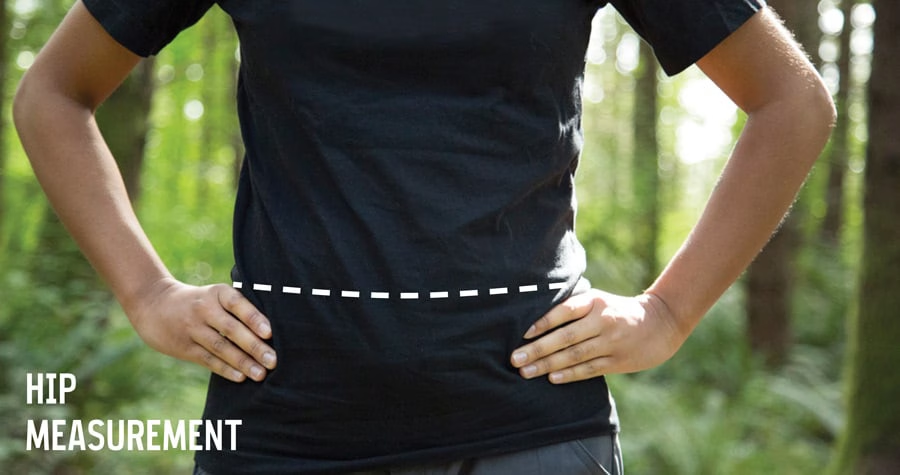
To measure your hip size, wrap your flexible tape measure around the top of your hips, precisely where you located your iliac crests when measuring your torso length.
This line is typically slightly higher than where your pants usually sit, so be aware that your hipbelt size might differ from your regular pant waist size.
Double-check the waist/hip measurement on your chosen pack’s size chart. If you find that the hipbelt size isn’t ideal for you, many reputable outdoor retailers, like REI, offer interchangeable hipbelt options, allowing for a more customized fit.
Mastering the Adjustable Torso Length Feature
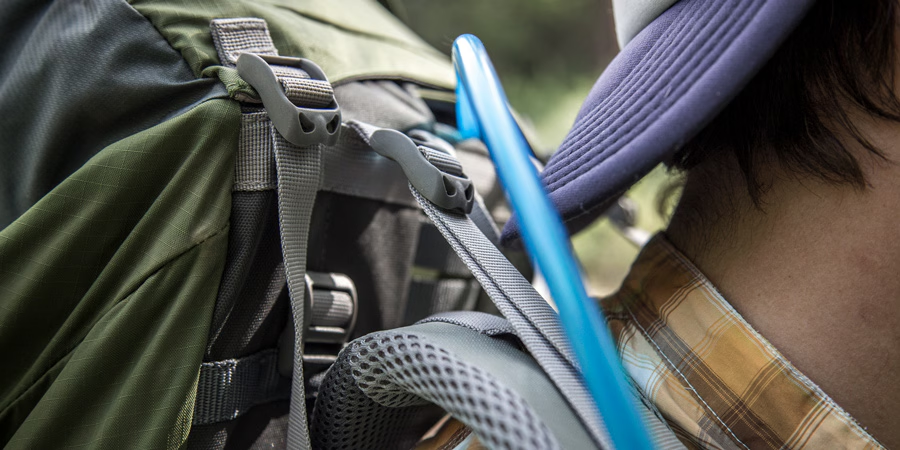
Many modern backpacks come equipped with an adjustable suspension system, a feature that significantly broadens the range of torso lengths a single pack can accommodate.
This adjustability allows for a more precise and personalized fit, which is invaluable for comfort on extended trips. While different brands employ various mechanisms for their adjustable systems, most are designed to be intuitive.
If your chosen pack has this feature, setting the torso length correctly is your very first and most important fit adjustment.
Should you find that subsequent fit adjustments aren’t yielding the desired comfort or weight distribution, always revisit and re-check your torso length setting. No amount of strap tightening or loosening can compensate for an incorrectly set adjustable suspension system.
If you encounter difficulties, don’t hesitate to seek assistance from outdoor gear specialists, such as those at an REI store, who can provide expert guidance.
Fine-Tuning Your Fit: A Step-by-Step Guide
Once you have the correct camping backpack size guide and your torso length is set, it’s time to fine-tune the fit using the various straps.
The primary goal of these adjustments is to ensure that the majority of your pack’s weight rests comfortably on your hips, leveraging the powerful muscles in your legs. To simulate a realistic load, it’s recommended to start with approximately 15 pounds of weight in your pack. You’ll also benefit from having a friend or a mirror to help you assess the fit after each adjustment. Before you begin, loosen all adjustment straps slightly.
The fitting process can be broken down into two main phases, followed by continuous on-trail adjustments:
- The Main Event: Focusing on the hipbelt and shoulder straps.
- The Finale: Adjusting the load-lifter straps and sternum strap.
Experienced hikers understand that pack fit is a dynamic process. They continuously make small tweaks to strap tension throughout their journey to alleviate pressure points and maintain optimal comfort. Think of it as an ongoing ‘encore’ performance for your body and your pack.
Step 1: The Hipbelt – Your Weight-Bearing Foundation
1.Put the Pack On: With your pack loaded, carefully put it on.
2.Position the Hipbelt: Maneuver the hipbelt so that its padding comfortably hugs the top of your hip bones (your iliac crests). If it feels too high or too low, make minor adjustments to your shoulder straps to raise or lower the hipbelt’s position.
3.Fasten and Tighten: Securely fasten the hipbelt buckle. Then, pull the straps to tighten it. The goal is a snug and secure fit that doesn’t uncomfortably pinch your hips. It should feel firm, but not restrictive.
4.Check Padding Placement: Ensure that the padded sections of the hipbelt are indeed sitting directly on the top of your hips. If they’ve shifted, readjust your shoulder straps and the hipbelt tension until you find that perfect sweet spot where the weight feels evenly distributed.
5.Clearance Check: The hipbelt padding should extend slightly beyond the front of your hipbones. Additionally, aim for at least one inch of clearance on either side of the center buckle. If you have less than this, it might indicate you need a different hipbelt size, and it’s worth checking with a specialist, like those at REI, for interchangeable options.
Step 2: Shoulder Straps – Guiding, Not Carrying
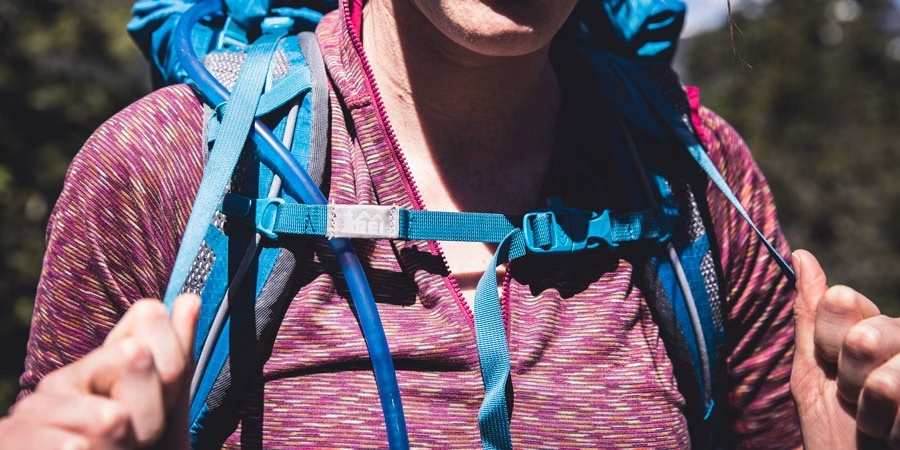
1.Tighten Gradually: Pull down and back on the ends of the shoulder straps to gently tighten them.
2.Proper Engagement: Your shoulder straps should wrap closely and comfortably around your shoulders. Crucially, they should not be bearing significant weight. Their primary role is to guide the pack and keep it close to your body, not to carry the load. If you feel a heavy pull on your shoulders, it indicates that too much weight is resting there, which can lead to strain in your shoulders, neck, and upper back.
3.Anchor Point Check: Verify that the shoulder strap anchor points on your backpack are positioned approximately 1 to 2 inches below the very top of your shoulders, roughly aligning with the top of your shoulder blades. If these anchor points are too high or too low, it suggests either your hipbelt is improperly positioned or your pack’s torso length setting is incorrect. Revisit those adjustments if needed.
4.Dynamic Tension: Learn to subtly vary the tension in your shoulder straps. During a hike, you can make small, incremental adjustments to relieve any developing pressure points or discomfort. This continuous micro-adjustment is key to long-term comfort.
Step 3: Load Lifters – The Subtle Balancers
1.Locate and Angle: Load-lifter straps connect the top of your shoulder harness to an anchor point typically found near the top of the pack’s back panel. When properly tensioned, these straps should angle back towards the pack body at approximately a 45-degree angle. This angle is crucial for effective load transfer.
2.Gentle Tension is Key: Resist the urge to overtighten the load lifters. While initial over-tensioning might feel supportive, it can quickly lead to pinched shoulder joints and significant discomfort over time.
Aim for a snug, yet flexible, tension. If you notice a gap or space at the top of your shoulder harness, it’s a sign that your load lifters are too loose; loosen them completely and try adjusting again.
Step 4: Sternum Strap – Unrestricted Movement
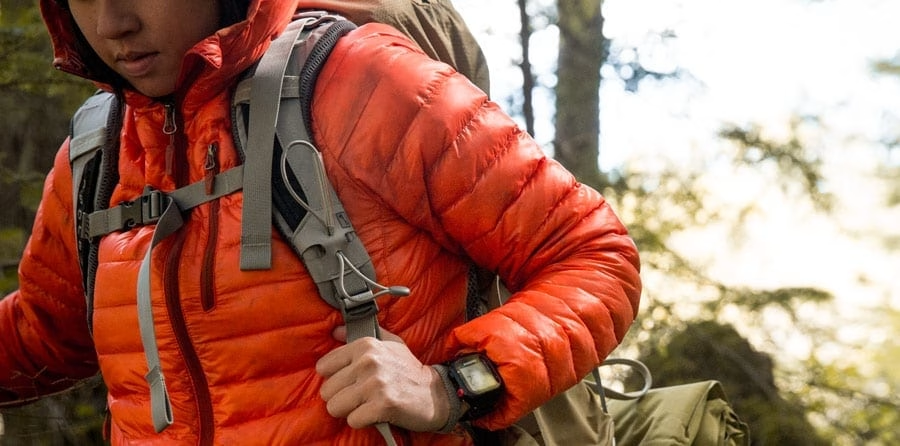
1.Position for Comfort: Slide the sternum strap until it rests comfortably across your chest, typically about an inch below your collarbones. This position allows for optimal chest expansion and arm movement.
2.Buckle and Adjust: Buckle the sternum strap and tighten it just enough to pull the shoulder straps inward, allowing your arms to move freely without chafing. The sternum strap helps stabilize the load and prevents the shoulder straps from slipping outwards.
3.Avoid Overtightening: A common mistake is overtightening the sternum strap. This can distort the overall fit of your harness, restrict your chest muscles, and even impede your breathing, making your hike less enjoyable. A gentle tension is all that’s needed here.
Maintaining Your Perfect Fit on the Trail
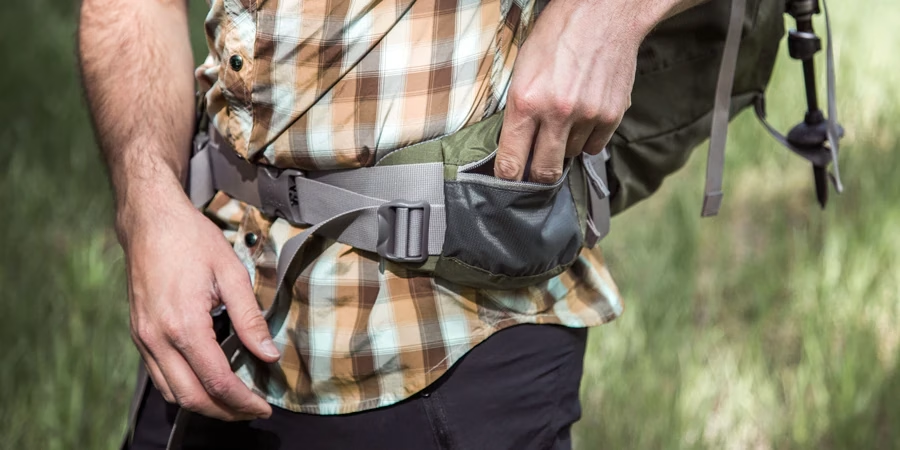
Even with a perfectly fitted pack at home, the realities of a long hike can challenge that initial comfort. After several miles, what felt ideal might start to feel less so. Achieving and maintaining a good fit is an ongoing process that continues throughout your journey.
- Practice Makes Perfect: Before hitting the trail for a multi-day trip, spend time at home or on short walks with your loaded pack. Experiment extensively with all the straps. Understand how each adjustment affects the feel and balance of the pack. The more familiar you are with your pack’s nuances, the better equipped you’ll be to make on-the-fly adjustments.
- Memorize Your Ideal Fit: Pay attention to how your pack feels when it’s perfectly adjusted. Take mental notes, or even a quick photo, of the strap positions. Knowing what your preferred fit looks like will allow you to quickly return to that comfortable setup if you ever need to loosen all straps for a break or readjust after a challenging section of trail.
- Continuous Micro-Adjustments: The trail is dynamic, and so should be your pack adjustments. Don’t hesitate to tweak your straps as you hike. A slight loosening of a shoulder strap here, a gentle tightening of the hipbelt there – these small, continuous adjustments can make a significant difference in preventing aches, pains, and pressure points. Trial and error will be your best teacher in discovering what works optimally for your body and your specific pack.
- Strategic Load Management: A common tactic among experienced hikers to combat load fatigue is to periodically shift the weight. This might involve tightening the shoulder straps slightly and loosening the hipbelt for a period, then reversing these steps later. This subtle shift allows different muscle groups to bear the load, providing a brief respite for others.
- Mind Your Posture: Be conscious of your body position while hiking. Leaning slightly forward can help keep the pack’s weight balanced over your hips and core, making the load feel more stable and manageable.
- Take Breaks and Unload: Whenever you stop for a break, take your pack off. This simple act gives your hard-working back a much-needed chance to rest, breathe, and recover. It also provides an excellent opportunity to stretch out any muscles that might be feeling overworked.
Further Your Adventure Knowledge
To ensure you’re fully prepared for your next outdoor excursion, consider reviewing our guide on essential camping equipment. A well-chosen backpack is just one piece of the puzzle; having the right gear for every aspect of your trip is paramount for a safe and enjoyable experience.