

The best Portable Power Banks for Camping 2025
Camping offers an incredible escape into nature, a chance to disconnect from the daily grind and reconnect with the wild. Yet, even in the heart of the wilderness, our reliance on electronic devices often remains. From keeping your phone charged for emergencies and navigation to powering headlamps, portable speakers, or even small medical devices, a reliable power source is essential. That’s where a portable power bank for camping becomes your indispensable companion.
Forget the days of dead batteries and missed photo opportunities. Modern power banks are more robust, efficient, and versatile than ever, designed to withstand the rigors of the outdoors while keeping your essential gear powered up. We’ve delved deep into the world of portable charging solutions, rigorously testing a variety of models to bring you the definitive guide to choosing the perfect power bank for your next camping trip.
Whether you’re a seasoned backcountry explorer or a weekend car camper, finding the right power bank can significantly enhance your outdoor experience. We’ll explore what makes a great camping power bank, highlight top contenders, and provide insights to help you make an informed decision. Get ready to stay charged, no matter how far off the grid you venture.
What Makes a Great Portable Power Bank for Camping?
Choosing the right power bank for your camping adventures isn’t just about capacity; it’s about finding a device that can stand up to the elements and reliably charge your gear when you need it most. Here are the key factors we considered in our evaluation:
Durability and Weather Resistance
Camping environments are unpredictable. Rain, dust, accidental drops, and extreme temperatures are all part of the experience. A good camping power bank should be built to last. Look for features like:
- IP Ratings: An Ingress Protection (IP) rating indicates how well a device is sealed against solids (like dust) and liquids (like water). For camping, an IP67 rating (dust-tight and submersible up to 1 meter for 30 minutes) is excellent, while IPX4 (splash-proof) offers basic protection.
- Rugged Construction: Power banks made with durable materials, reinforced corners, and shock-absorbing designs can withstand bumps and drops that are common in outdoor settings.
Capacity (mAh) and Output Power (Watts)
This is where you determine how much juice your power bank can provide and how quickly. Capacity is measured in milliampere-hours (mAh), and output power in watts (W).
- mAh: The higher the mAh, the more charges you’ll get for your devices. For a weekend camping trip, 10,000-20,000 mAh might suffice for smartphones and small electronics. Longer trips or charging larger devices like tablets or laptops will require 25,000 mAh or more.
- Output Power (W): This dictates charging speed. USB-A ports typically offer 5-12W. USB-C Power Delivery (PD) ports are crucial for faster charging of modern smartphones, tablets, and especially laptops, often delivering 18W, 30W, 45W, or even 100W. Ensure the power bank’s output matches or exceeds your device’s charging requirements for optimal performance.
Portability and Size
Every ounce and inch counts when you’re packing for a camping trip. While higher capacity often means a larger and heavier power bank, there’s a sweet spot between power and portability. Consider:
- Weight and Dimensions: Can it easily fit into your backpack without adding significant bulk? For backpacking, lighter and more compact options are preferred. For car camping, you might prioritize higher capacity over extreme portability.
- Integrated Cables/Features: Some power banks come with built-in cables or even small LED lights, reducing the need for extra accessories and saving space.
Charging Technology and Features
Modern power banks offer more than just basic charging. Look for features that enhance convenience and efficiency:
- USB-C Power Delivery (PD): Essential for fast charging and for powering larger devices like laptops.
- Quick Charge (QC): Another fast-charging standard, often found on USB-A ports.
- Wireless Charging: Convenient for compatible devices, eliminating the need for cables.
- Pass-Through Charging: Allows the power bank to charge itself while simultaneously charging connected devices.
- Multiple Ports: Having several output ports (USB-A, USB-C) lets you charge multiple devices at once.
- Solar Charging Capability: While not a primary charging method, some power banks can be topped up via small solar panels, which can be a lifesaver on extended trips.
User Experience and Reliability
Beyond the technical specifications, a great power bank should be intuitive to use and consistently reliable. This includes clear battery indicators, easy-to-access ports, and a reputable brand with good customer support. After all, you don’t want to be fumbling with complicated controls when you’re trying to charge your phone in the dark.
Our Top Picks for the Best Portable Power Banks for Camping in 2025
After extensive testing in real-world camping scenarios, from weekend getaways to more rugged backcountry adventures, we’ve identified the power banks that truly stand out. Here are our top recommendations, each excelling in different areas to meet the diverse needs of campers.
Best Overall Portable Power Bank for Camping: Nestout 15000mAh Outdoor Battery
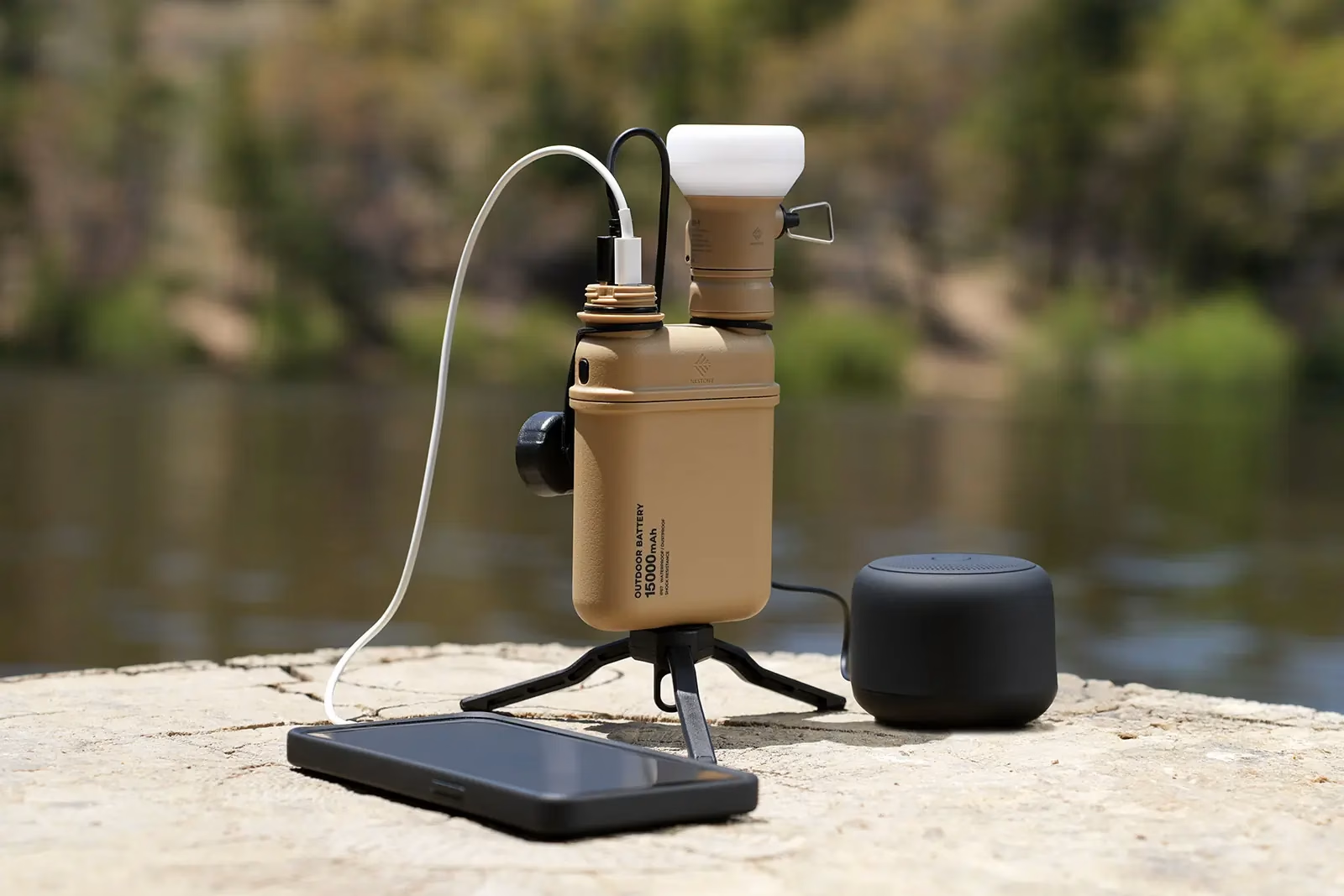
When it comes to the perfect blend of rugged durability, versatile features, and reliable performance, the Nestout 15000mAh Outdoor Battery ($60) is our top choice. We’ve put this power bank through its paces for over a year, and it has consistently impressed us with its resilience and functionality.
While its 15,000 mAh capacity might not be the largest on our list, its thoughtful design and robust construction make it the most versatile and dependable companion for most campers. What truly sets the Nestout apart is its exceptional durability. With an IP67 rating, it’s completely dustproof and can be submerged in water for up to 30 minutes without issue. This level of protection provides invaluable peace of mind when you’re facing unpredictable weather or a clumsy moment at the campsite.
The Nestout isn’t just a power bank; it’s a multi-functional tool. Its three ports (all of which are also inputs) can be used to charge up to three devices simultaneously. But the real magic lies in its compatibility with Nestout’s proprietary LED lamp and flashlight accessories. This transforms the power bank into a powerful area light, capable of illuminating your tent or campsite for up to 26 hours. While using the light will naturally reduce the number of phone charges you’ll get, the added utility is a game-changer for minimalist campers.
With a total output of 32W, the Nestout charges devices efficiently and can be fully recharged in just 3.5 hours, making it easy to top up from a larger power station, solar panel, or wall outlet. Its unique aesthetic, combined with a handy included tripod for easy placement, makes the Nestout 15000mAh Outdoor Battery a stylish, practical, and incredibly durable choice for any outdoor enthusiast.
Best Budget Portable Power Bank for Camping: Skullcandy Fat Stash 2
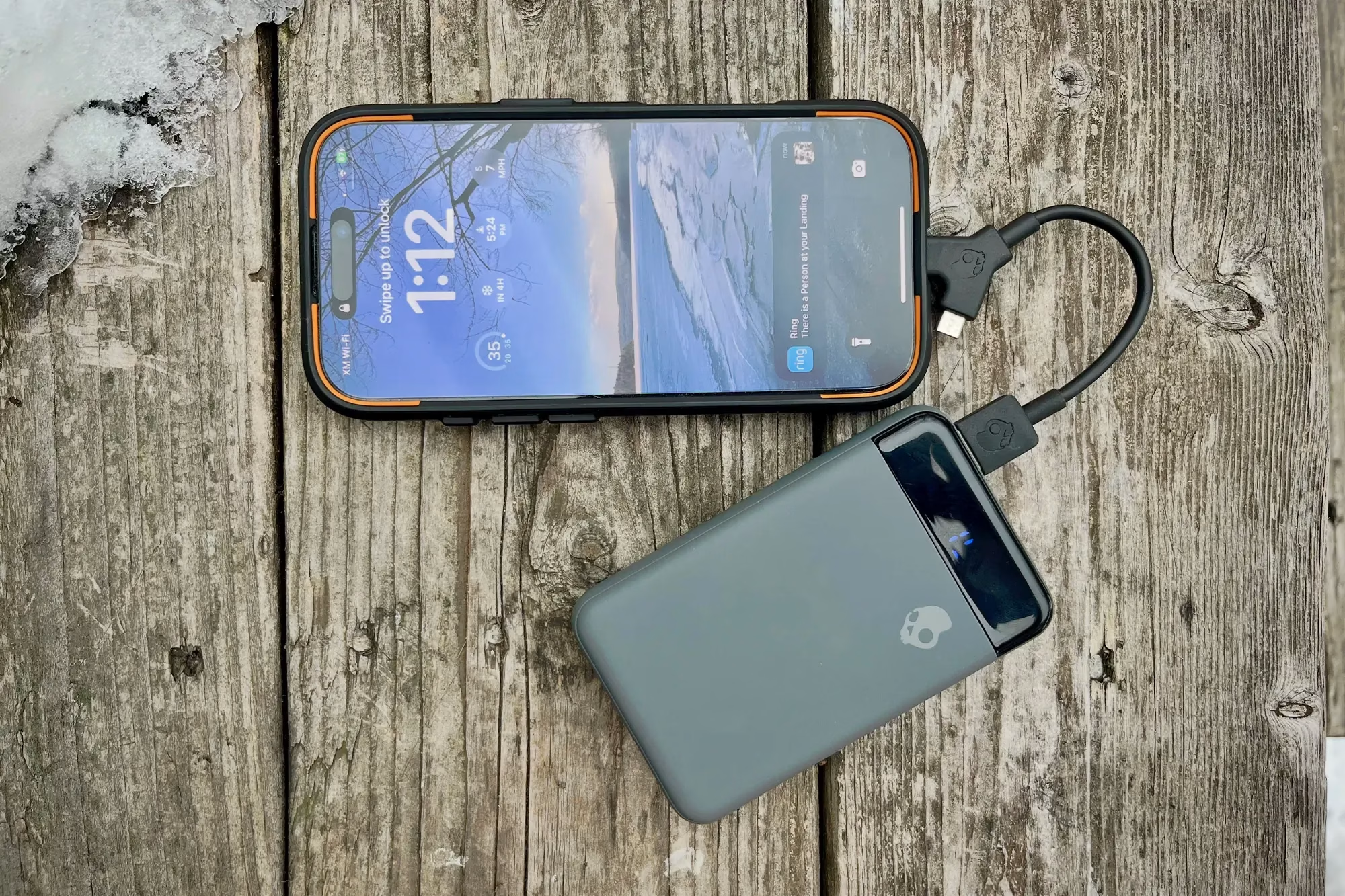
For campers who need reliable power without breaking the bank, the Skullcandy Fat Stash 2 ($40) is an absolute gem. Don’t let its compact size fool you; this little powerhouse punches well above its weight, offering impressive charging capabilities in a pocket-friendly design.
Boasting a 10,000 mAh capacity, the Fat Stash 2 might not be the largest on the market, but its enhanced Power Delivery (PD) capabilities allow it to deliver a robust 20W of charging power. This means it can quickly bring your smartphone back to life, often providing 50% battery life in just about half an hour. With up to 40 hours of total battery life, it’s more than capable of keeping your essential devices charged throughout a typical weekend camping trip.
One of the standout features of the Fat Stash 2 is its sheer portability. It’s so small and lightweight that you’ll barely notice it in your pocket or backpack, making it an ideal choice for day hikes or minimalist camping. While Skullcandy doesn’t provide specific durability or environmental ratings, our real-world testing showed it to be surprisingly resilient. It withstood multiple accidental drops and splashes without any issues, proving it can handle the bumps and scrapes of outdoor life.
The included 6-inch combo charging cable (USB-A to Micro-USB/USB-C) is a thoughtful addition, allowing you to charge various devices without carrying extra cords. We particularly appreciated the short cable, which enables you to stack your phone directly on top of the power bank for convenient, tangle-free charging on the go. An interesting observation during our tests was its ability to squeeze out extra power even when seemingly low on charge; on several occasions, it managed to fully charge an iPhone 14 Pro from 20% battery even when the power bank itself was showing only 12-15% remaining.
In summary, the Skullcandy Fat Stash 2 offers exceptional value, combining portability, decent capacity, and fast charging in a durable, budget-friendly package. It’s a fantastic option for casual campers, day-trippers, or anyone looking for a reliable backup power source that won’t weigh them down.
Best Portable Power Bank for Laptops and Larger Devices: BioLite Charge 100 Max
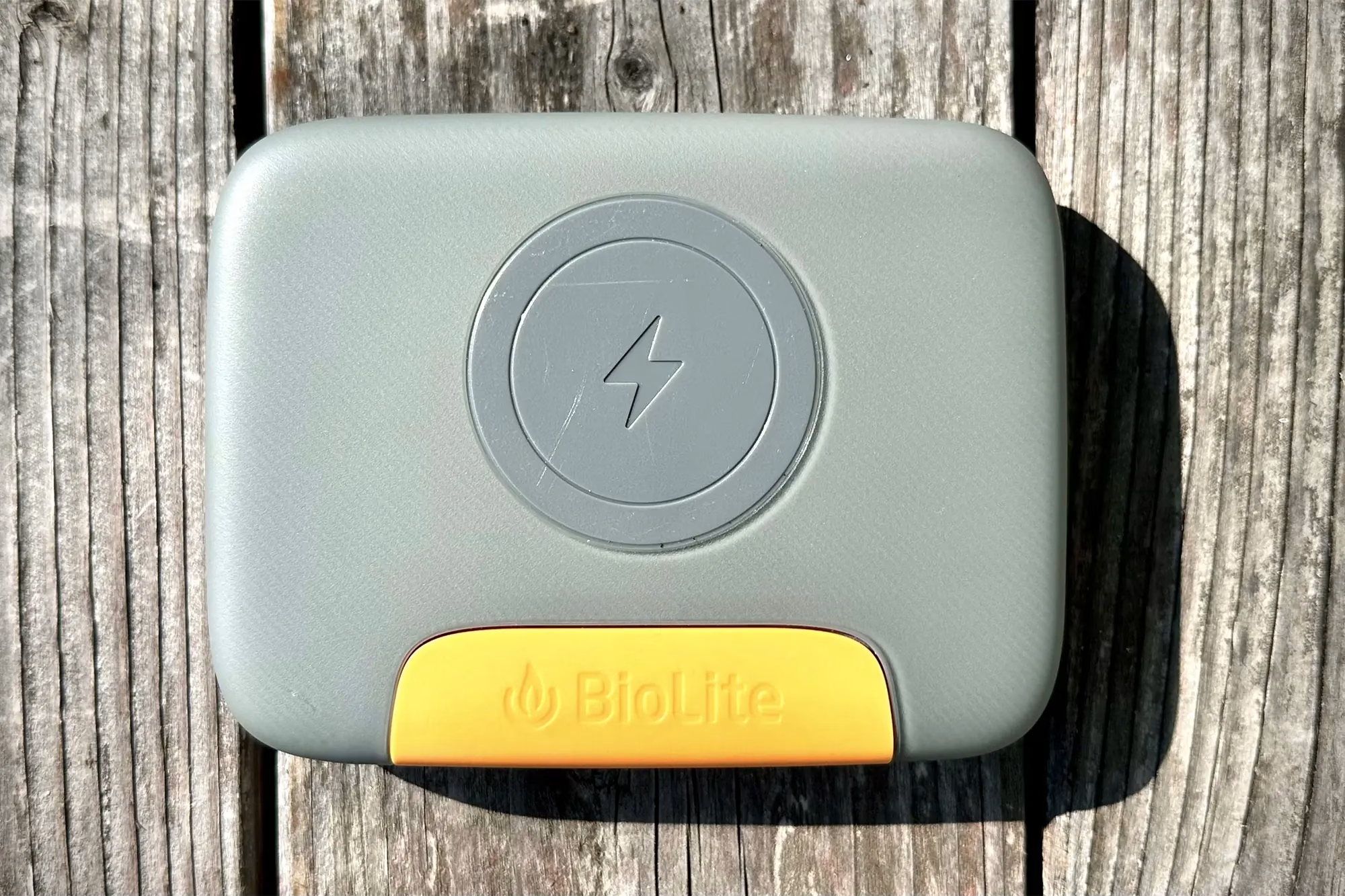
For those who can’t completely disconnect from their digital lives, even in the great outdoors, or for campers who bring along power-hungry devices like laptops, drones, or camera equipment, the BioLite Charge 100 Max ($150) is an unparalleled solution. This power bank strikes an impressive balance between substantial capacity and efficient power delivery, making it ideal for a wide range of charging needs.
With a robust 25,000 mAh battery, the Charge 100 Max is designed to keep multiple devices powered up. Its true strength lies in its versatile port selection, allowing you to charge up to five devices simultaneously. It features a wireless charging pad, a standard USB-A port, and three USB-C ports. While the wireless pad and one USB-C port deliver up to 15W, the two dedicated USB-C Power Delivery (PD) ports are the stars of the show, capable of outputting an impressive 100W. This high wattage is crucial for efficiently charging laptops and other large electronics, ensuring they get the power they need without rapidly draining the power bank.
We’ve been using the BioLite Charge 100 Max extensively since May, taking it on various trips across New England. It has proven to be incredibly reliable for everything from remote work sessions in a tent to keeping a family’s worth of devices charged during a vacation. Its ability to handle both small and large devices with such efficiency means you’re not just getting a charge; you’re getting a smart, optimized power solution.
Beyond its charging prowess, the Charge 100 Max boasts a rugged construction with a 1-meter drop rating, giving you confidence that it can withstand the inevitable knocks and bumps of outdoor use. While it’s not fully waterproof (lacking an IP rating), its durability is certainly a step above many standard power banks. For campers who need serious power for serious gear, the BioLite Charge 100 Max is an investment that pays dividends in connectivity and convenience.
Most Portable Power Bank for Camping: Goal Zero Flip 24
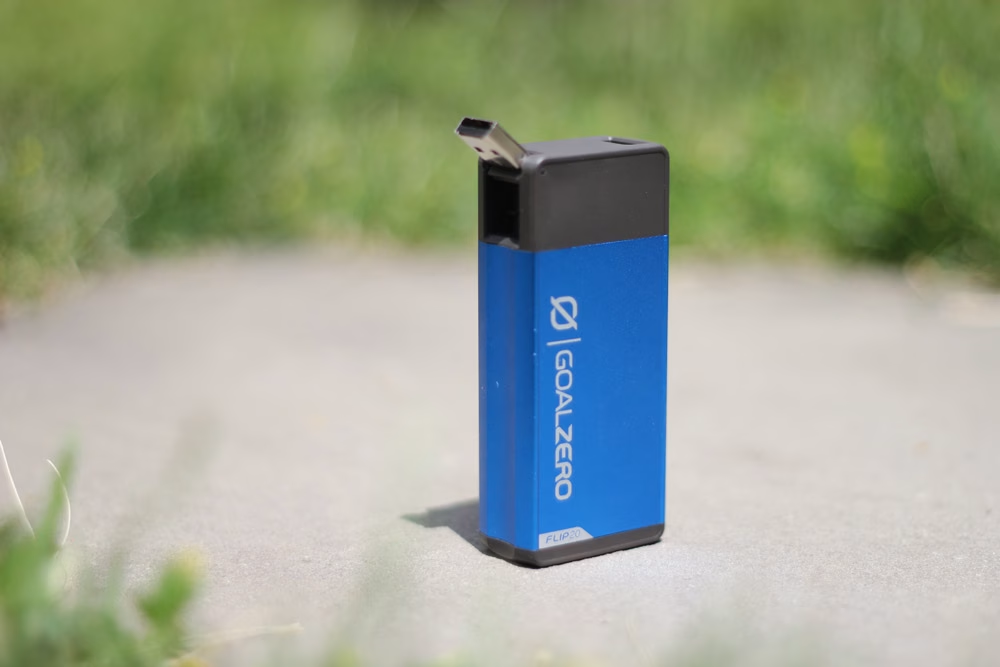
When every ounce matters and space is at a premium, the Goal Zero Flip 24 ($30) emerges as the champion of portability. This compact power bank is designed for the minimalist camper, the ultralight backpacker, or anyone who needs a reliable burst of power without any unnecessary bulk.
Weighing in at just 4.6 ounces and incredibly small, the Flip 24 is barely noticeable in your pocket or pack. Its 6,700 mAh capacity is perfect for topping off a smartphone once or twice, or keeping smaller devices like headlamps, GPS units, or action cameras charged throughout a short trip. While it won’t power your laptop, it excels at providing essential power for critical devices when you’re deep in the backcountry.
The Flip 24 features a simple, intuitive design with a flip-out USB-A port for charging your devices and a micro-USB input for recharging the unit itself. It’s designed for straightforward, no-fuss operation, which is exactly what you want when you’re out in the elements. Its robust construction, typical of Goal Zero products, means it can handle the rigors of outdoor use, though it doesn’t carry a specific IP rating for water resistance.
What makes the Flip 24 particularly appealing for camping is its compatibility with Goal Zero’s portable solar panels. This allows you to recharge the power bank directly from the sun, offering true off-grid power independence. Imagine hiking all day, using your phone for navigation, and then being able to top it up using solar power while you set up camp. This synergy with solar charging makes it an excellent choice for extended trips where access to wall outlets is non-existent.
For those who prioritize lightweight gear and efficient, targeted charging for essential small electronics, the Goal Zero Flip 24 is an unbeatable option. It’s a testament to the idea that sometimes, less is truly more, especially when you’re carrying everything on your back.
Best Portable Power Bank for Kids: Nimble CHAMP Pro Portable Charger
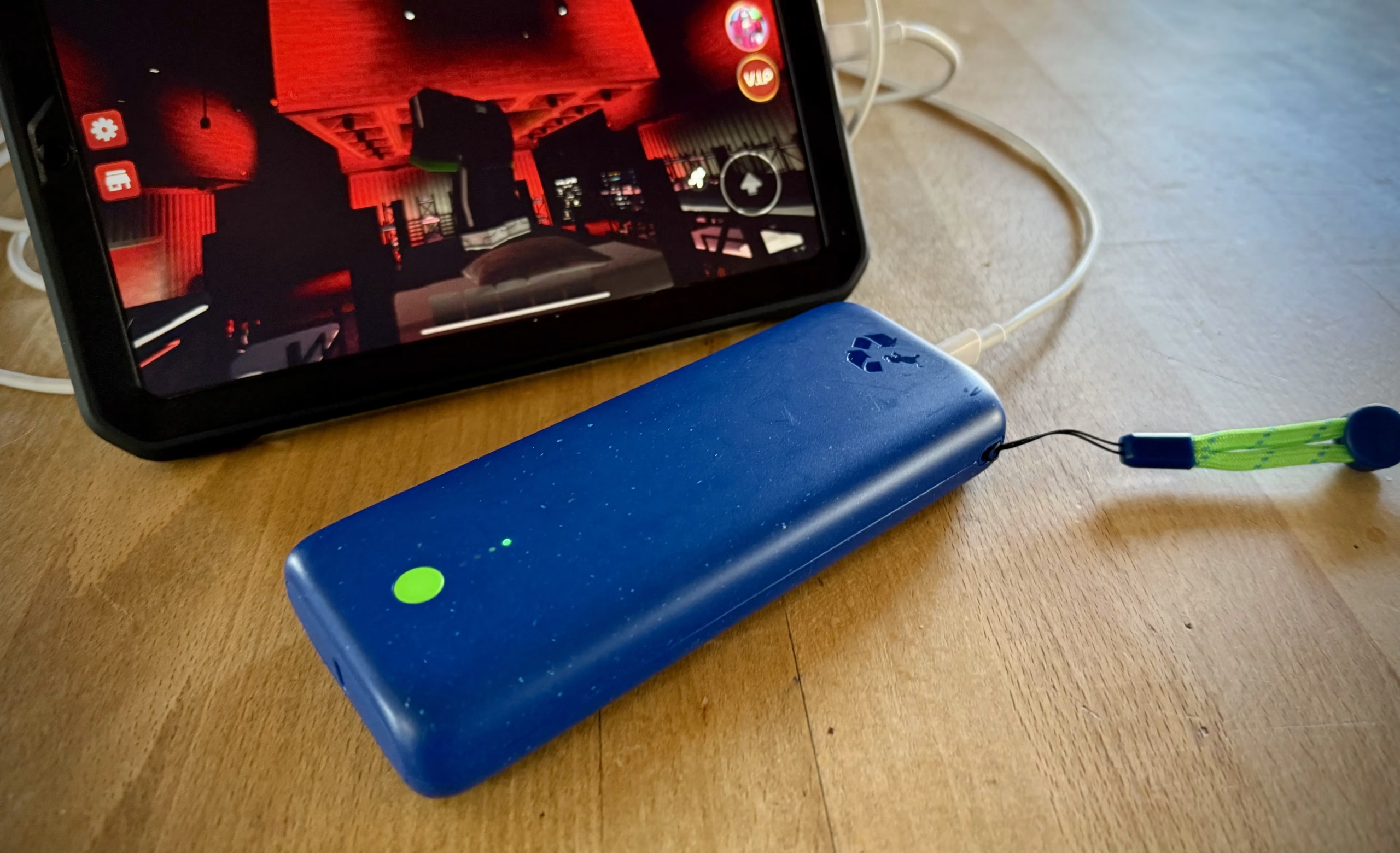
When it comes to equipping younger adventurers with a reliable power source, safety, durability, and ease of use are paramount. The Nimble CHAMP Pro Portable Charger ($50) stands out as an excellent choice for kids, offering a blend of features that make it both practical for parents and appealing for children.
While its 7,900 mAh capacity might seem modest compared to some larger power banks, it’s perfectly adequate for keeping a child’s tablet, gaming device, or smartphone charged throughout a day of camping or outdoor play. What truly sets the Nimble CHAMP Pro apart for this demographic is its robust, eco-friendly construction. Nimble is known for its commitment to sustainability, using recycled materials in their products, which is a great bonus for environmentally conscious families.
The CHAMP Pro is designed to be user-friendly, with simple plug-and-play functionality that even younger children can manage. Its compact size and lightweight design make it easy for small hands to hold and carry, fitting comfortably into a backpack or even a pocket. Durability is also a key factor; while not explicitly rated for extreme outdoor conditions, its solid build quality can withstand the typical bumps and drops that come with active kids.
Safety features are also a consideration when choosing electronics for children. The Nimble CHAMP Pro includes standard protections against overcharging, overheating, and short circuits, providing peace of mind for parents. It also offers fast charging capabilities, ensuring devices are ready to go quickly, minimizing downtime and potential meltdowns.
For families heading out on camping trips, the Nimble CHAMP Pro offers a responsible and reliable way to keep kids’ essential devices powered. It’s a practical solution that balances capacity with portability and durability, all while aligning with sustainable practices.
Portable Power Bank Comparison Chart
To help you quickly compare our top recommendations and other notable mentions, here’s a detailed chart outlining their key specifications, features, and pricing. This should assist you in finding the perfect portable power bank for camping that aligns with your specific needs and budget.
| Model | Capacity (mAh) | Output (W) | IP Rating | Price (USD) | Key Features | Best For |
| Nestout 15000mAh Outdoor Battery | 15,000 | 32 | IP67 | $60 | Rugged, multi-functional light, fast recharge | Overall camping, durability |
| Skullcandy Fat Stash 2 | 10,000 | 20 (PD) | Not specified (durable) | $40 | Compact, fast charging, integrated cable | Budget, portability |
| BioLite Charge 100 Max | 25,000 | 100 (PD) | Not specified | $150 | Laptop charging, multiple ports, wireless | Laptops, multiple devices |
| Goal Zero Flip 24 | 6,700 | 10 | Not specified | $30 | Ultralight, solar compatible | Ultralight backpacking, small devices |
| Nimble CHAMP Pro Portable Charger | 7,900 | 18 (PD) | Not specified | $50 | Eco-friendly, user-friendly, durable | Kids, general use |
| Anker PowerCore Slim 10000 PD | 10,000 | 18 (PD) | Not specified | ~$35 | Slim design, reliable, fast charging | Everyday carry, light camping |
| Dark Energy Poseidon | High | Varies | Extreme (submersible) | ~$100+ | Extreme durability, waterproof | Harsh environments, serious adventurers |
| Goal Zero Sherpa 100AC | 25,600 | 100 (AC/PD) | Not specified | ~$300 | AC outlet, wireless charging | Car camping, powering appliances |
| BioLite Charge 20 PD | 20,000 | 18 (PD) | Not specified | ~$70 | Compact, fast charging | More capacity than basic, general use |
Note: Prices are approximate and may vary.
How to Choose Your Portable Power Bank for Camping
Selecting the ideal portable power bank for camping can feel overwhelming with the myriad of options available. To simplify the process, consider these steps and questions to guide your decision, ensuring you pick a power bank that perfectly matches your outdoor lifestyle and power needs.
- Assess Your Power Needs: What Devices Will You Charge?
Before anything else, make a list of all the electronic devices you plan to bring camping. This includes smartphones, headlamps, GPS devices, cameras, tablets, smartwatches, and even laptops. For each device, note its battery capacity (usually in mAh) and its charging input (USB-A, USB-C PD, etc.).
- Smartphones & Small Electronics: Most smartphones have batteries ranging from 3,000 mAh to 5,000 mAh. A 10,000 mAh power bank can typically charge a smartphone 1-2 times. For a weekend trip, a 10,000-20,000 mAh power bank is usually sufficient.
- Tablets & Larger Gadgets: Tablets often have capacities between 6,000 mAh and 10,000 mAh. For these, you’ll want a power bank with at least 20,000 mAh.
- Laptops & High-Power Devices: Laptops require significantly more power, often needing 45W or more via USB-C Power Delivery. For these, look for power banks with capacities of 25,000 mAh or higher and high wattage USB-C PD output (e.g., 60W, 100W).
- Consider Trip Duration and Type: How Long Will You Be Off-Grid?
The length and nature of your camping trip heavily influence the required power bank capacity.
- Day Trips/Overnight: A smaller, more portable 5,000-10,000 mAh power bank might be all you need for a quick top-up.
- Weekend Camping (2-3 days): A 15,000-25,000 mAh power bank should keep your essential devices charged.
- Extended Trips (4+ days): For longer excursions, especially if you’re charging multiple devices or larger electronics, consider a 25,000 mAh+ power bank, possibly supplemented with solar charging capabilities or a larger portable power station.
- Car Camping vs. Backpacking: If you’re car camping, weight and size are less critical, allowing for larger, higher-capacity units. For backpacking, prioritize lightweight and compact designs.
- Evaluate Durability and Environmental Protection: Will It Survive the Wild?
Your power bank needs to withstand the elements. Look for features that indicate ruggedness:
- IP Rating: As discussed, an IP rating is crucial. For general camping, IPX4 (splash-proof) is a minimum. For wet or dusty environments, aim for IP67 or higher.
- Construction Materials: Rubberized exteriors, reinforced corners, and impact-resistant casings offer better protection against drops and impacts.
- Temperature Tolerance: Ensure the power bank is rated to operate within the temperature ranges you expect to encounter.
- Port Selection and Charging Speed: How Many Devices, How Fast?
Consider the types of ports you need and the charging speed required.
- USB-A Ports: Standard for older devices and accessories.
- USB-C PD Ports: Essential for fast charging modern smartphones, tablets, and laptops. Look for high wattage output (e.g., 18W, 30W, 45W, 60W, 100W).
- Wireless Charging: A convenient feature if your devices support it, reducing cable clutter.
- Pass-Through Charging: Allows you to charge the power bank and your devices simultaneously, which can be very useful.
- Recharging Options: How Will You Recharge the Power Bank?
Think about how you’ll replenish your power bank’s energy.
- Wall Outlet: The fastest and most common method. Ensure the power bank supports fast input charging.
- Solar Panel: Ideal for extended off-grid trips. Some power banks have integrated solar panels (though these are often slow), while others are compatible with external portable solar panels.
- Car Charger: Useful for car camping or road trips.
By carefully considering these factors, you can confidently select a portable power bank for camping that will keep your devices powered and your adventures uninterrupted.
Essential Gear for Your Camping Adventure
Beyond just power, a successful camping trip relies on having the right equipment. If you’re just starting out or looking to refine your packing strategy, check out our comprehensive guide on camping gear list for beginners. It covers everything from shelter and sleeping systems to cooking essentials and safety items, ensuring you’re fully prepared for your next outdoor escapade.